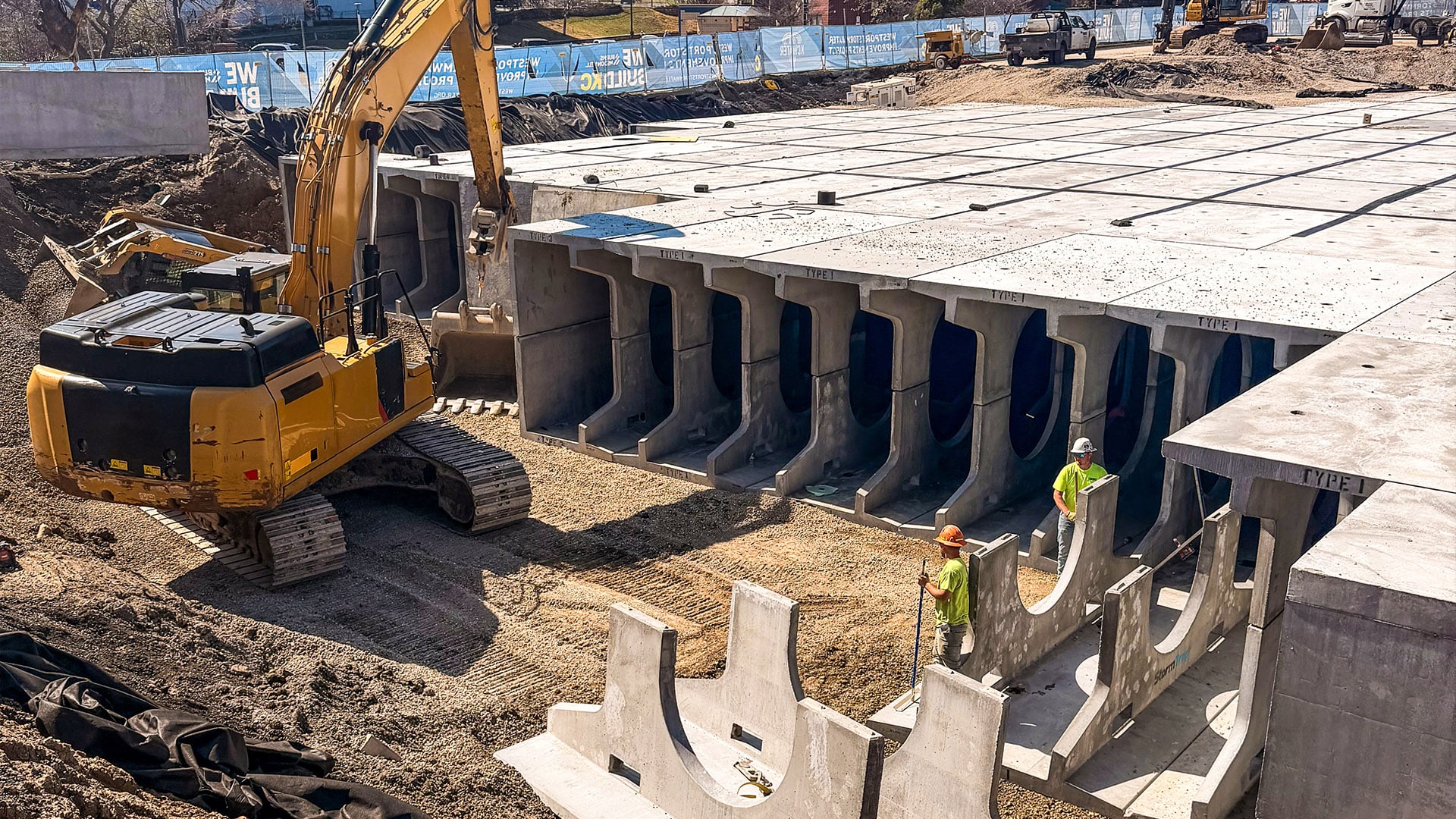
“The World Cup really shaped the way we had to deliver the Westport project,” says Lauren Moore, a project manager in the Water Group at Burns & McDonnell. “The event was on everyone's radar from the beginning, and that was one of the big drivers for the project moving forward with progressive design build delivery. Our teams expedited design and early construction packages to complete as much as possible knowing World Cup visitors would be gathering in the Westport area.”
Kinchen adds, "The level of flexibility needed to complete critical work in advance, secure the site during the World Cup matches and have the ability to return once things wrap up was made possible through progressive design-build.”
The approach was considered a winner from the project's very beginning. "Unlike traditional design-bid-build, where separate design and construction procurements and public approvals can add six months or more to a project schedule, progressive design-build provides a faster, more adaptable approach," Moore says.
"Working with the City, we chose this delivery method so our construction team could be involved from the very beginning, creating a single, integrated team from planning through construction. As a result, we moved from notice to proceed on concept design to breaking ground in less than nine months, allowing critical flood mitigation improvements to reach the community much sooner."
The Kansas City Streetcar Pavilion project was another project driven by the World Cup. Positioned at the end of the newly opened Riverfront Extension of the streetcar line and at the doorstep of the hotel that Argentina called home while in KC, the Streetcar Pavilion’s iconic structure was a gathering place for soccer fans from around the globe. Just six months prior, the location was not much more than a concrete platform. Port KC, along with the City of Kansas City, Missouri, the KC Streetcar Authority and the KCATA, chose to utilize progressive design-build to deliver the project leveraging grant funds secured by U.S. Rep. Emanuel Cleaver, of Missouri. Upon the selection of Burns & McDonnell to deliver the project, the team worked to design and complete construction of the project in just under six months. A project of this type using traditional delivery methods would have taken at least three times the amount of time to complete.
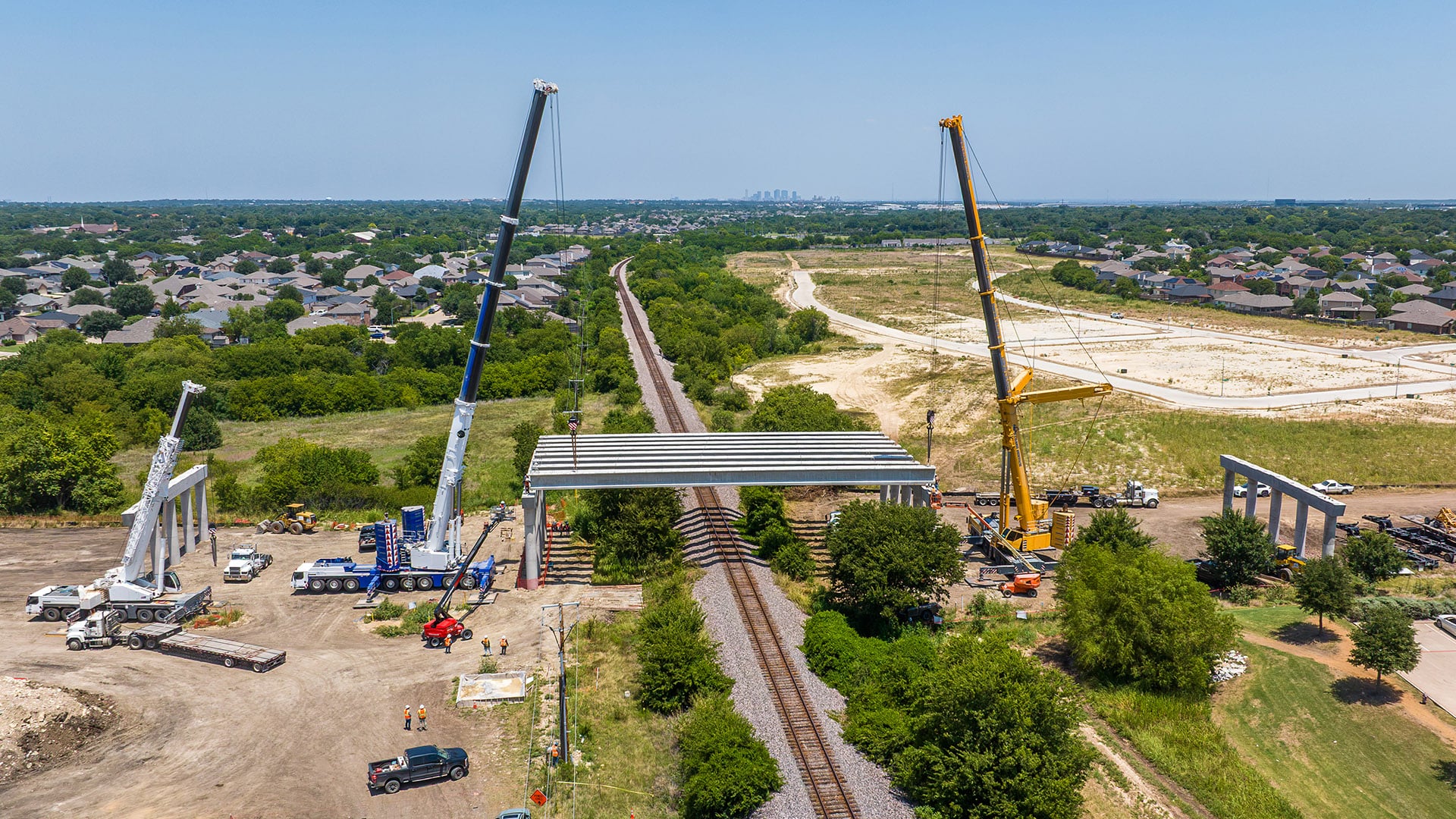
For the Everman Parkway project in Fort Worth, Texas, Burns & McDonnell is working to deliver a mile of new roadway, a multilane roundabout, a 750-foot-long bridge spanning Union Pacific Railroad tracks, and enhanced multimodal and pedestrian connections. By streamlining early project development through progressive design-build, the team advanced from contract execution to groundbreaking in just nine months, setting a new standard for the city and accelerating delivery beyond what is typical for comparable infrastructure projects.



.svg)


.svg)


.svg)



.png)