Feature | August 21, 2026

Speed and Flexibility Drive the Rise of Progressive Design-Build

Few infrastructure projects come with the luxury of time. New manufacturing facilities, regional events, aging infrastructure and rapid population growth often accelerate demands for updates and new development. As funding, schedules and priorities will continue to evolve, selecting the right project delivery method can have a lasting impact on project success.

That's where progressive design-build is showing its value.

Like traditional design-build project delivery, progressive design-build brings design and construction together under a single team with responsibility from project development through completion. What sets it apart is when such collaboration begins. By engaging the design-builder at the earliest stages of design, owners gain access to construction guidance during planning, scope development, cost estimating and risk evaluation — when decisions have the greatest influence on project outcomes.

Utilizing progressive design-build takes a holistic view of the entire project life cycle in early project development. This gives owners versatility to evaluate progress at key milestones, and understand the major schedule and cost drivers associated with procurement and construction. They can then determine the proper path forward before advancing into construction.

The approach is particularly effective for projects funded across multiple fiscal cycles, allowing owners to align available funding with the work that can be completed at each stage. It also benefits projects with long lead times for materials or equipment, where early procurement can help reduce the impacts of inflation, supply chain uncertainty and schedule delays.

"By advancing the design further before procurement, we reduce uncertainty and position projects for more competitive pricing,” says David Kinchen, a construction director at Burns & McDonnell. “At the same time, the approach gives the owner space to speed up critical components while deferring others until they are needed, creating value for both schedule and cost."

Projects that are still in the early stages of design, or those with limited owner resources, can also benefit from bringing design and construction together early. The collaborative process provides greater transparency into project costs, allowing owners to understand where money is allocated and spent, and how such investments can deliver the greatest value.

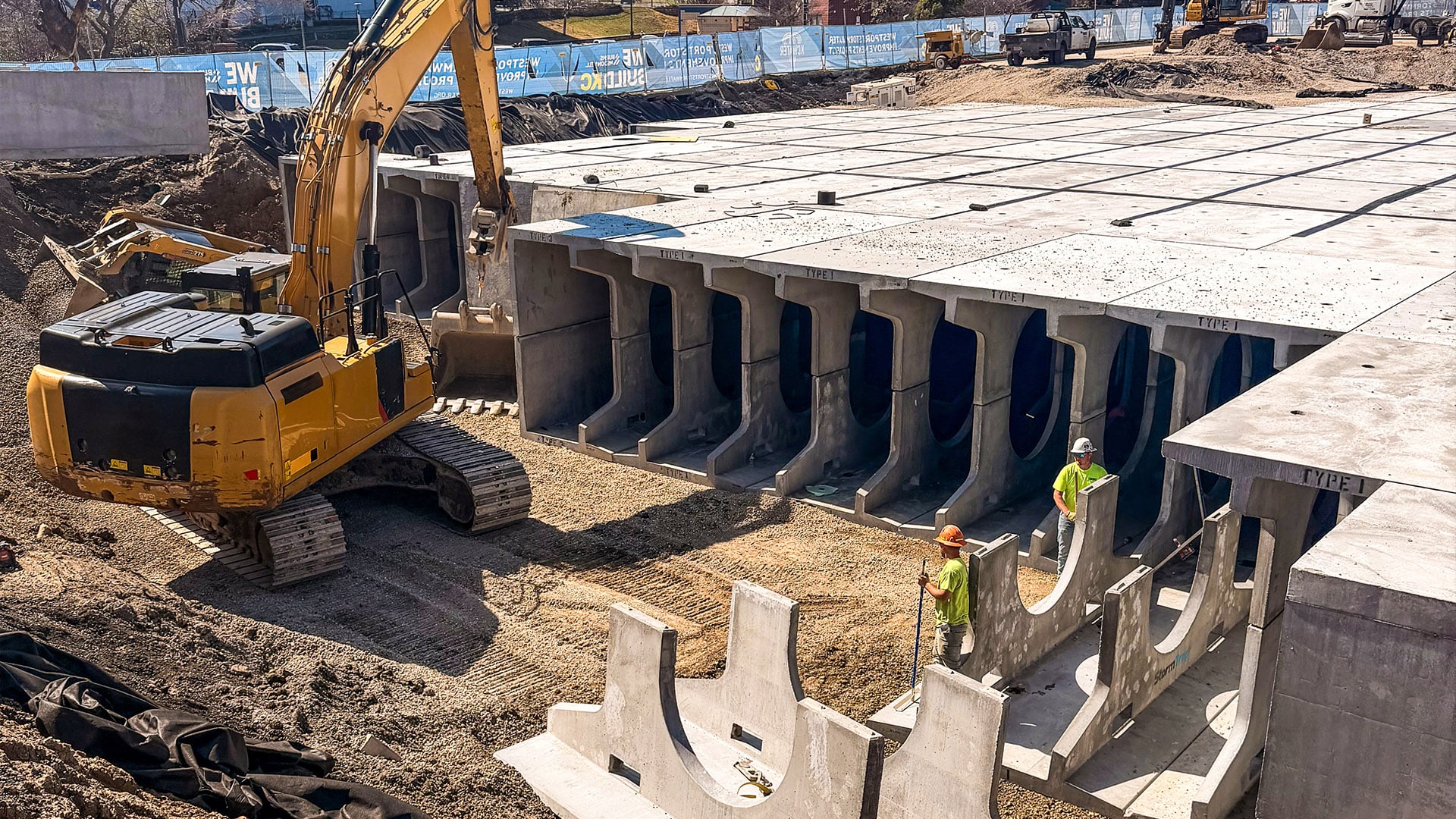
Just south of downtown Kansas City, Missouri, the Westport Stormwater Improvements project sits within one of the city's busiest corridors and entertainment districts. The project could not remain an active work zone during the summer of 2026 as the region prepared to welcome thousands of visitors for the World Cup. The project team arranged to pause construction for nearly two months — from just before Argentina’s group stage opener to soon after the team’s quarterfinal win against Switzerland — as the Kansas City region provided base camps for four international teams and embraced enthusiastic fans from near and far.

BM26-No2-ProgressiveDesignBuild-image-Westport

Westport Stormwater Improvements

“The World Cup really shaped the way we had to deliver the Westport project,” says Lauren Moore, a project manager in the Water Group at Burns & McDonnell. “The event was on everyone's radar from the beginning, and that was one of the big drivers for the project moving forward with progressive design build delivery. Our teams expedited design and early construction packages to complete as much as possible knowing World Cup visitors would be gathering in the Westport area.”

Kinchen adds, "The level of flexibility needed to complete critical work in advance, secure the site during the World Cup matches and have the ability to return once things wrap up was made possible through progressive design-build.”

The approach was considered a winner from the project's very beginning. "Unlike traditional design-bid-build, where separate design and construction procurements and public approvals can add six months or more to a project schedule, progressive design-build provides a faster, more adaptable approach," Moore says.

"Working with the City, we chose this delivery method so our construction team could be involved from the very beginning, creating a single, integrated team from planning through construction. As a result, we moved from notice to proceed on concept design to breaking ground in less than nine months, allowing critical flood mitigation improvements to reach the community much sooner."

The Kansas City Streetcar Pavilion project was another project driven by the World Cup. Positioned at the end of the newly opened Riverfront Extension of the streetcar line and at the doorstep of the hotel that Argentina called home while in KC, the Streetcar Pavilion’s iconic structure was a gathering place for soccer fans from around the globe. Just six months prior, the location was not much more than a concrete platform. Port KC, along with the City of Kansas City, Missouri, the KC Streetcar Authority and the KCATA, chose to utilize progressive design-build to deliver the project leveraging grant funds secured by U.S. Rep. Emanuel Cleaver, of Missouri. Upon the selection of Burns & McDonnell to deliver the project, the team worked to design and complete construction of the project in just under six months. A project of this type using traditional delivery methods would have taken at least three times the amount of time to complete.

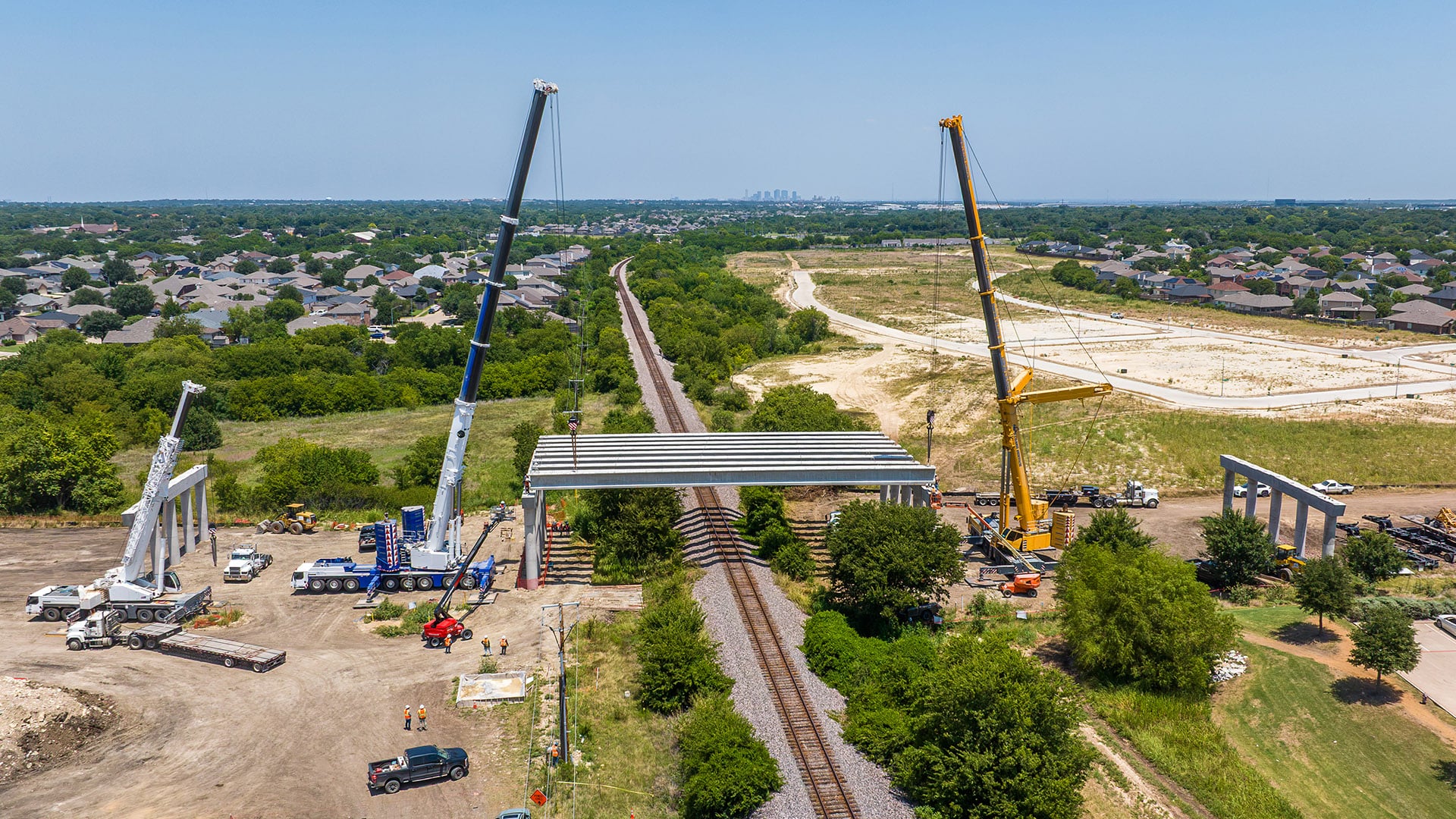
For the Everman Parkway project in Fort Worth, Texas, Burns & McDonnell is working to deliver a mile of new roadway, a multilane roundabout, a 750-foot-long bridge spanning Union Pacific Railroad tracks, and enhanced multimodal and pedestrian connections. By streamlining early project development through progressive design-build, the team advanced from contract execution to groundbreaking in just nine months, setting a new standard for the city and accelerating delivery beyond what is typical for comparable infrastructure projects. 

BM26-No2-ProgressiveDesignBuild-image-Everman

Everman Parkway

"Having the contractor, designer and Union Pacific at the table from day one changed the pace of the project," says Steve Kellerman, a construction director at Burns & McDonnell. "Instead of waiting until design was complete to determine how the bridge would be built, we worked through constructability and railroad impacts together from the start. That early collaboration streamlined the railroad's review and approval process, helping keep the project moving at a fast pace."

Such speed can generate welcome benefits.

In San Marcos, Texas, the city is supporting planned residential growth by partnering with several developers to share the cost of a central wastewater treatment plant, a project being developed by Burns & McDonnell using progressive design-build. The approach enables the city to provide interim treatment as the new homes are occupied, all as design and construction move forward on the new central reclamation facility capable of treating 2 million gallons per day.

"Planned change is a lot less expensive than unplanned change," Kinchen says. "What we discovered during the process is that the developers couldn't keep up with the speed of delivery we were able to provide for the wastewater plant. Unanticipated delays during construction have a greater impact on cost and schedule. However, early planning for work interruptions during the preconstruction phase allows room for adjustments that minimize or eliminate cost and schedule impacts. As a result, we are able to tap the brakes in areas that matter while accelerating work in others."

Flexibility, schedule and cost are rarely independent. Decisions made early in project development often influence all three. As demand for resilient infrastructure continues to grow, communities increasingly are recognizing the value of progressive design-build as part of their project delivery strategies.

"The ability to use progressive design-build requires fewer resources from our clients and will continue to be an approach we expect to see used more frequently," Kellerman says. "One reality is that states and communities that have progressive design-build as a tool in their toolbox are going to be ahead of the states and communities that don't. The most recent example of this is in Missouri. This past session the legislature, led by Representative John Voss and Senator Mike Henderson, passed a bill, followed by a signature from Governor Mike Kehoe, allowing all cities and municipalities to utilize progressive design-build on capital improvement projects."

No two infrastructure projects face the same challenges, but many benefit from making critical decisions being made earlier in the process. By bringing owners, designers and constructors together from day one, progressive design-build helps teams make informed decisions sooner, adapt to changing project needs and deliver with greater confidence.

Thought Leaders

Steve Kellerman, PE

Construction Director

Burns & McDonnell

David Kinchen

Construction Director

Burns & McDonnell

Lauren Moore, PE

Project Manager

Burns & McDonnell

Contact Us  

Subscribe