Feature | October 16, 2026

Bridging More Than a Railroad: How Fort Worth’s Everman Parkway Extension Reconnects a Community

The Everman Parkway Extension Project in Fort Worth, Texas, is helping bridge a physical divide that has separated residents and businesses for decades. Delivering that connection efficiently and safely is critical. By bringing designers and builders together from day one, Burns & McDonnell is using progressive design-build (PDB) to accelerate project delivery while advancing real-time collaboration and innovation in the field.
A Long-Standing Barrier

Stand on the edge of the Everman industrial corridor on a weekday morning and you can feel bustling energy. On the east side is an area of growing manufacturing and economic development and to the west, residential neighborhoods that fuel both the workforce and the community.

Yet these parts of south Fort Worth have long been defined by a low, mechanical rumble: the Union Pacific Railroad, with freight cars rolling along a steel corridor. It has turned what should be a simple trip across town into a challenging detour.

Soon, that detour will be no more and the hum of the railroad will be accompanied by other new sounds: bicyclists riding down the corridor, cars driving over a newly constructed bridge and crosswalk signals guiding neighbors to walk down a brand-new pathway.

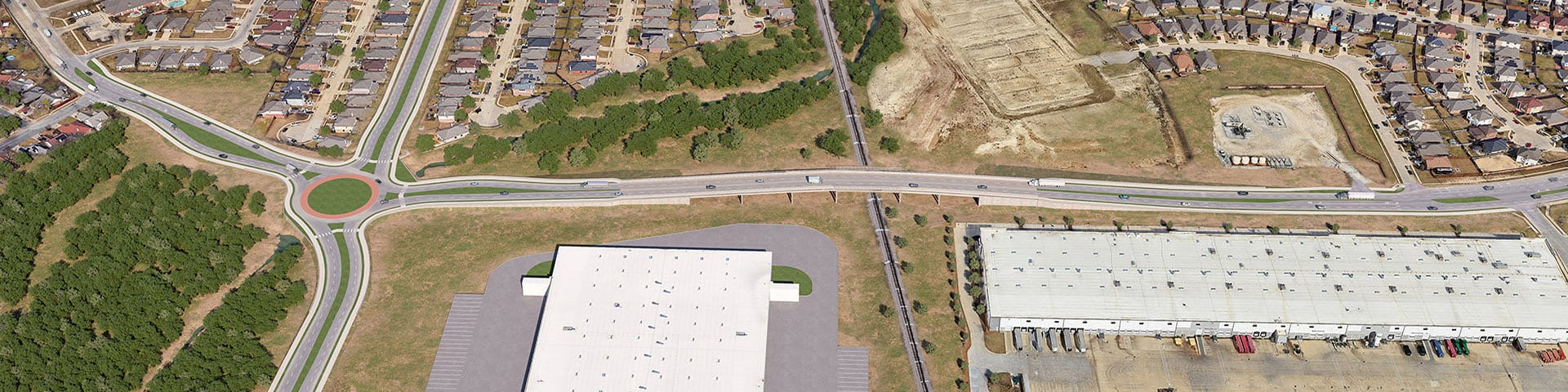
The Everman Parkway Extension Project is a near mile-long connection bringing all those new features — with promise of a more unified and accessible future.

A New Blueprint Created

That promise began taking shape with the City of Fort Worth’s 2022 bond program.

“One of our main goals with that capital program is to relieve congestion and promote economic development,” says Lauren Prieur, director of the city’s Transportation & Public Works Department. “And this is one of those projects that ranked most highly, primarily just because of the corridor that it lies on.”

“The City of Fort Worth became interested in the progressive design-build delivery model during initial conversations about the Everman Parkway Project,” says Andrew Reid, project manager and vice president for the Transportation Group at Burns & McDonnell. “We were able to show the city the value. We gave them a preliminary timeline of how we might approach the project to improve their speed of capital delivery.”

City leaders were also searching for ways to deliver these types of major infrastructure improvements to their community more quickly.

Burns & McDonnell submitted the initial proposal as the only team serving as an integrated design-builder, ultimately securing the work for the Everman Parkway Extension Project.

“This project is the beginning of the future for connectivity in Fort Worth.”

Lauren Prieur, Director, Transportation & Public Works
City of Fort Worth
Director, Transportation & Public Works
City of Fort Worth

Listening to the Community

When the Transportation & Public Works Department announced the project in 2024, leaders partnered with Burns & McDonnell and conducted public meetings at a local church to hear from those impacted the most: Fort Worth residents and commuters.

“What we heard from our residents was, ‘I’m tired of getting blocked behind this train’ or ‘I have to drive miles out of my way to get around this,’ ” Prieur says. “This project really enhances that safety and predictability through that great separation to improve that travel reliability.”

By listening and incorporating pedestrian safety features early — such as wide multiuse trails, ADA-compliant crosswalk signals, and a modern, multilane roundabout to calm traffic — the project team earned strong local backing.

BM26-No3-EvermanParkway-Image-Rendering-Shorter

Everman Parkway Extension Project rendering.
“Being right in the middle of a residential neighborhood, you have a tremendous amount of pedestrian traffic,” Reid says. “We heard the community say they want pedestrian-use paths. We knew our solution would need to accommodate people cycling and kids heading to school.”

How Progressive Design-Build Works

The Everman Parkway Extension is Fort Worth’s first progressive design-build transportation project. With Fort Worth consistently ranking as one of the fastest growing cities in the United States, there’s a high demand for speed — a demand this project delivery approach is specifically designed to meet.

For municipalities like Fort Worth, design-bid-build is the most common way public infrastructure projects are procured. In this traditional approach, engineers draw up detailed plans and municipalities put them out to bid and hand them off to builders. It’s a process where unexpected field challenges can lead to costly delays and rework, and project teams are not working collaboratively together from the outset.

Progressive design-build rewrites the old ways of delivery.

Think of it like solving a complex, custom-engineered puzzle where the people manufacturing the pieces are sitting alongside the people designing them. Instead of discovering near the end that pieces don't quite fit together, the team works collaboratively from the outset, refining each component as the overall picture takes shape.

But the collaboration isn’t limited to just being at the table. It extends onto the jobsite.

The Field Challenges: Water, Trains and Texas Heat

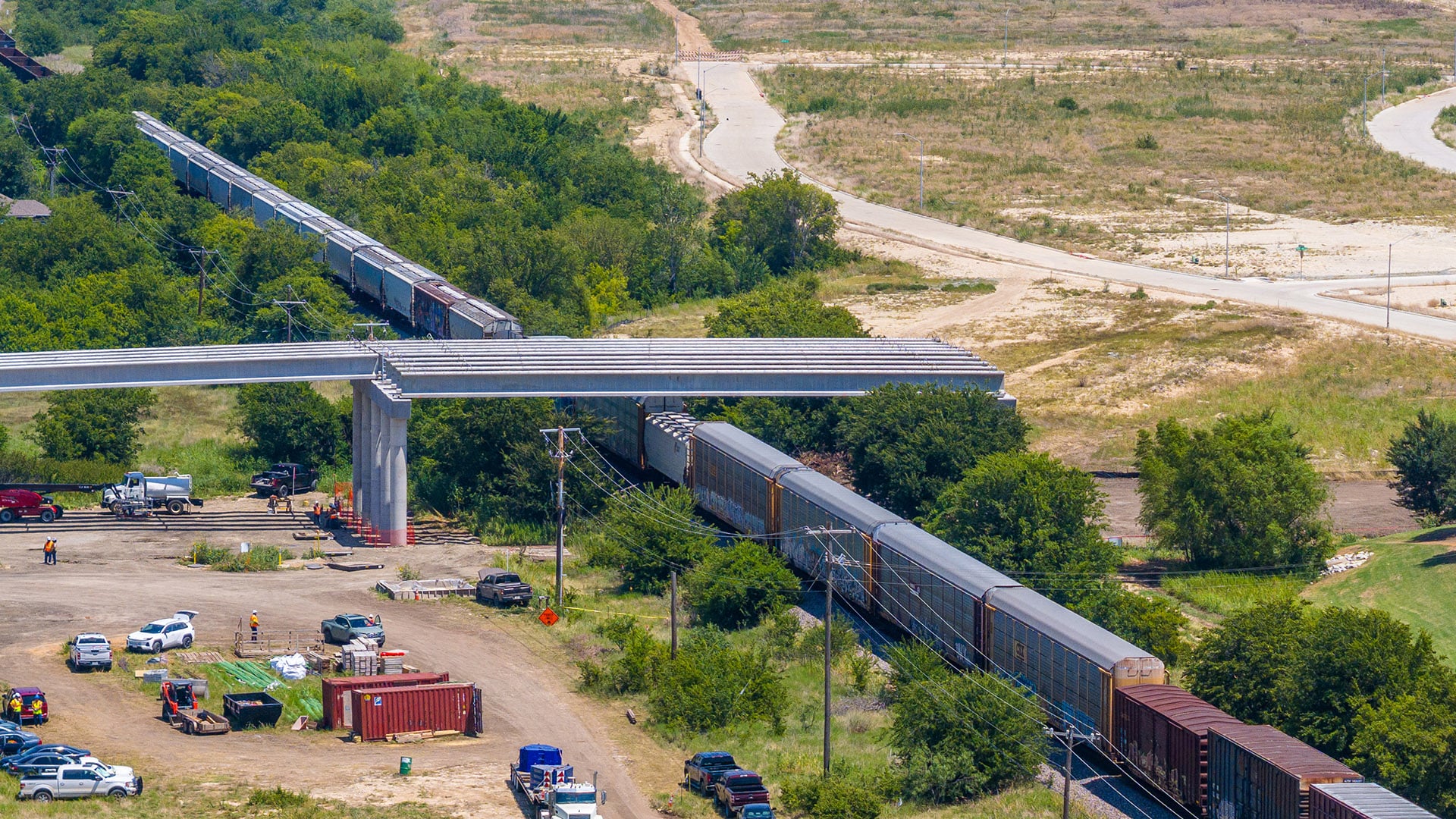
Building a 750-foot bridge across an active freight railroad line is an engineering challenge on its own. But on the Everman Parkway Extension, the team faced several other complex site conditions long before the first pre-stressed concrete girder was put into place.

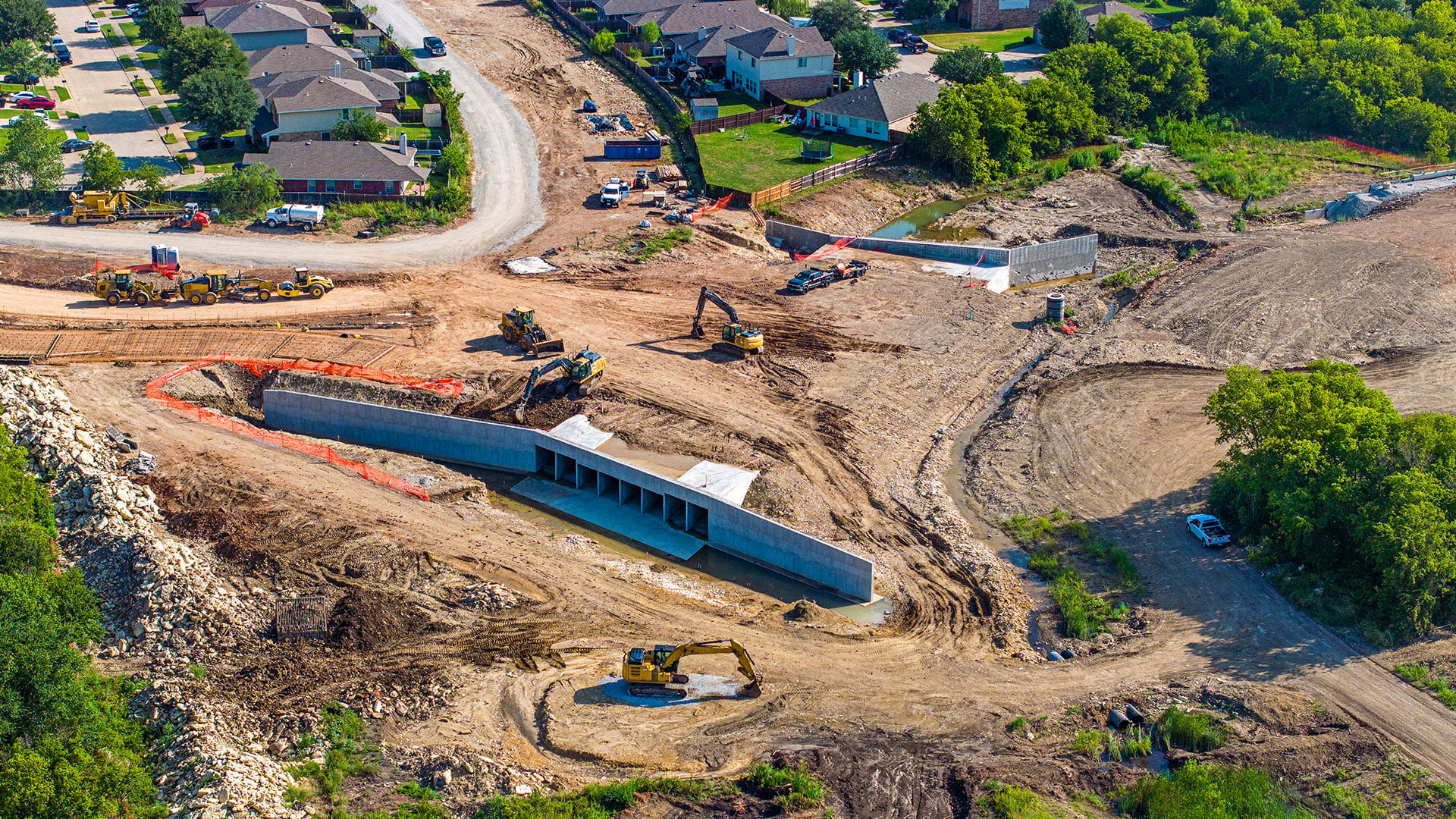
One of the first hurdles was navigating Sycamore Creek, an environmentally sensitive wetland area and major flood plain that feeds directly into the Trinity River. Originally, the City of Fort Worth anticipated needing to install two separate bridges over the creek.

BM26-No3-EvermanParkway-Image-Culvert

The team developed a more efficient solution: an eight-cell box culvert made of reinforced concrete. Each of its eight channels measures 8 feet by 8 feet, allowing the creek to flow through a single structure while reducing erosion, known as scour, near the adjacent neighborhoods.

Beyond the wetland area, the team has also been managing earthwork across nearly a mile of uneven terrain. By feeding 3D design models directly into earthwork management systems, the team optimized mass haul operations and brought clarity and predictability to subcontractor sequencing.

“We’ve been able to give those models to our construction team and estimators so they can be more precise,” Reid says. “How do we want to sequence the work in a way that is safe for our craft and operators in a constrained area? How do we make sure we’re only handling the material once in the operation? That’s been a huge advantage as we’ve been working with our subcontractors as we think about how we’re going to efficiently deliver the job.”

Then, the long-standing railroad corridor comes into play. Union Pacific trains run along the tracks constantly and can’t be stopped at will, meaning overhead girder lifts had to be executed within carefully negotiated work windows. The team utilized digital site tools to perform real-time quality assurance on the spot.

BM26-No3-EvermanParkway-Image-Train

“When girders arrive on-site, they have a natural camber to account for the future bridge deck loading,” says Tony Kulesa, civil structural engineer at Burns & McDonnell. “As they’re being set, we walk along them, survey the location and elevations, and triple-check the numbers so everyone is completely confident.”

But perhaps the greatest field test is the relentless Texas heat, with heat indexes up to 120 degrees for weeks on end during the summer months.

“We’ve had additional scope added and hazardous site conditions to remediate,” Reid says. “I’m so proud of our team in the field. They’ve stayed with it through it all without complaints and done a tremendous job.”

Tech Spotlight: Bringing 3D Blueprints to Life in the Dirt

On the jobsite of the Everman Parkway Extension Project, Tony Kulesa, civil structural engineer at Burns & McDonnell, holds an iPad running Trimble SiteVision augmented reality (AR) hardware. Through the screen, a virtual 3D engineering model is overlaid directly onto the physical environment in real time.
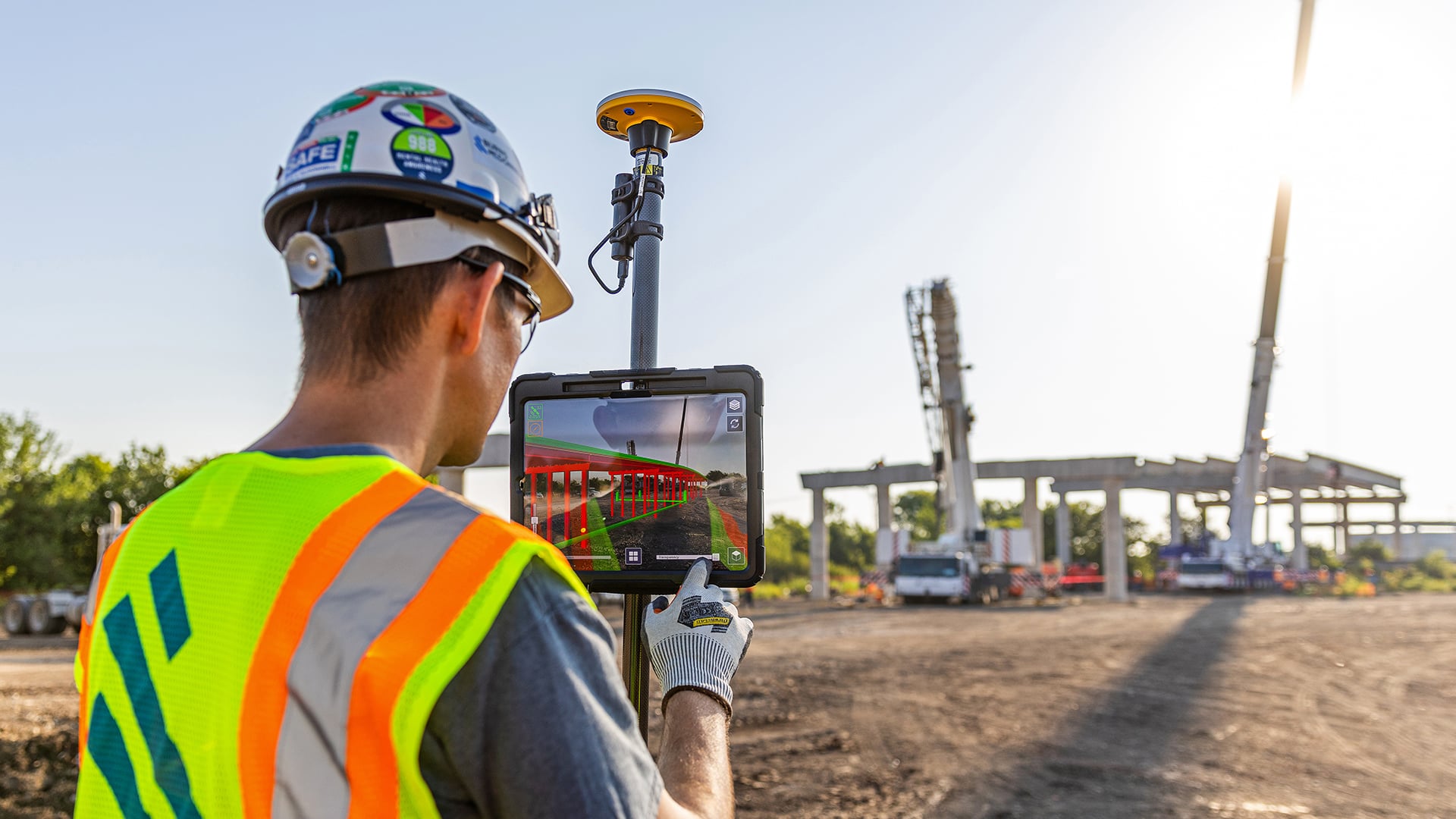
“It’s very useful for us to visualize the 3D models we’ve been working on as engineers,” Kulesa explains. “And we can show our construction people in the field: ‘Here it is in real life through this iPad screen.’ “

For Kulesa, the AR tool functions as a digital, high-precision tape measure and survey rod. This technology allows field crews to verify station alignments, map underground utilities and stake out site features with pinpoint precision.

“What I like about this innovation is that it’s not just cool pictures and video — it’s also a survey rod,” Kulesa says. “It has a physical, tangible value for everyday use.”

Kulesa emphasizes that bringing 3D engineering models into the dirt goes beyond convenience to drive proactive quality control.

“It lets us see when things are off ahead of time before we pour concrete or place structural elements,” Kulesa says. “It gets us to solutions faster.”

A New Horizon Ahead

By mid-2027, the completed Everman Parkway bridge will offer a brand-new vantage point. Below, the Union Pacific freight train will rumble along the tracks, carrying cargo across the nation as it has for decades; only now, road and pedestrian traffic above will seamlessly flow.

For Reid and the Burns & McDonnell team, this project is personal. They’re not just the engineers and builders behind the infrastructure; they are the neighbors who will also rely on it.

“A lot of this team lives in Fort Worth,” Reid says. “We not only want to deliver great projects for our customers, but we also want to deliver them where we live, where we work, where we play, where our kids are going to be raised. That’s had a lot of meaning to the team.”

For the City of Fort Worth, this extension project is a major milestone: the first step in a broader citywide effort to tackle around 200 remaining rail crossings.

“This project is the beginning of the future for connectivity in Fort Worth,” Prieur explains. “To see kind of our first major one go so well, I think is going to help us get more funding for this, get more interest and relieve congestion.”

South Fort Worth has built its bridge to the future, and the road ahead is wide open.

Thought Leaders

Andrew Reid, PE

Vice President
Transportation Group

Burns & McDonnell

Tony Kulesa, PE

Associate Structural Engineer
Oil, Gas & Chemical Group

Burns & McDonnell

Lauren Prieur, PE, PMP, CCM

Director, Transportation & Public Works

City of Fort Worth

Contact Us  

Subscribe