The Promise of 5G
Based on what is being said about 5G, one could conclude it is the sole technology to consider. However, like any other technology evaluation, multiple considerations must be weighed in order to properly assess the two technologies and their benefits to utilities.
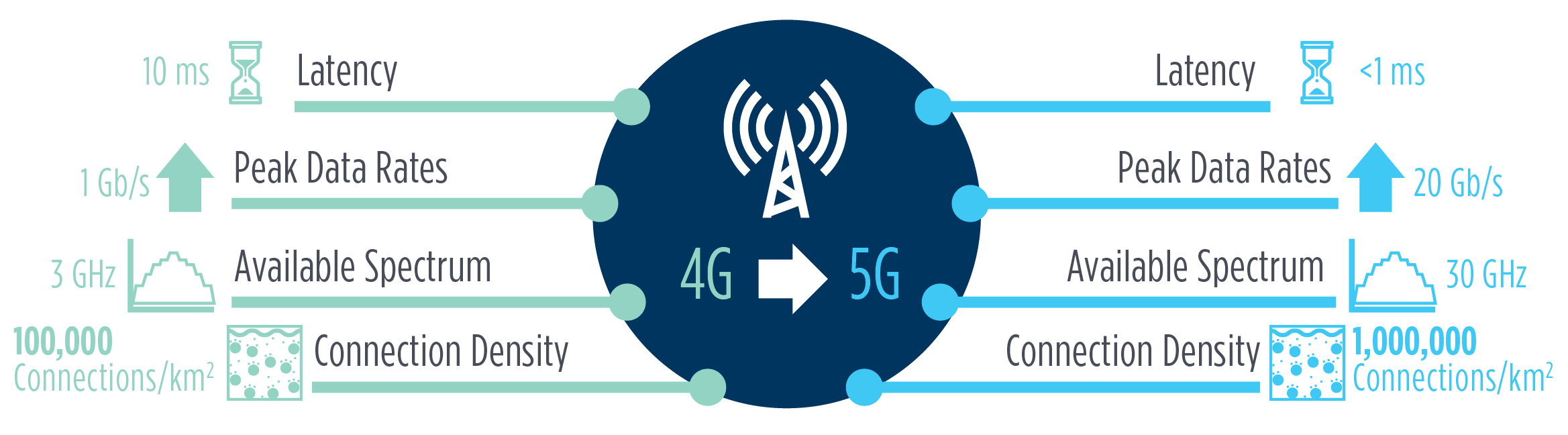
It is easy to find headlines publicizing the theoretical benefits of 5G. These include the promise of capacity to support millions of devices per unit area, over 20 times the download (DL) and upload (UL) speeds, ultra-low latency (sub 1 millisecond) and other core improvements enhancing overall network performance that would have seemed impossible just a few short years ago.
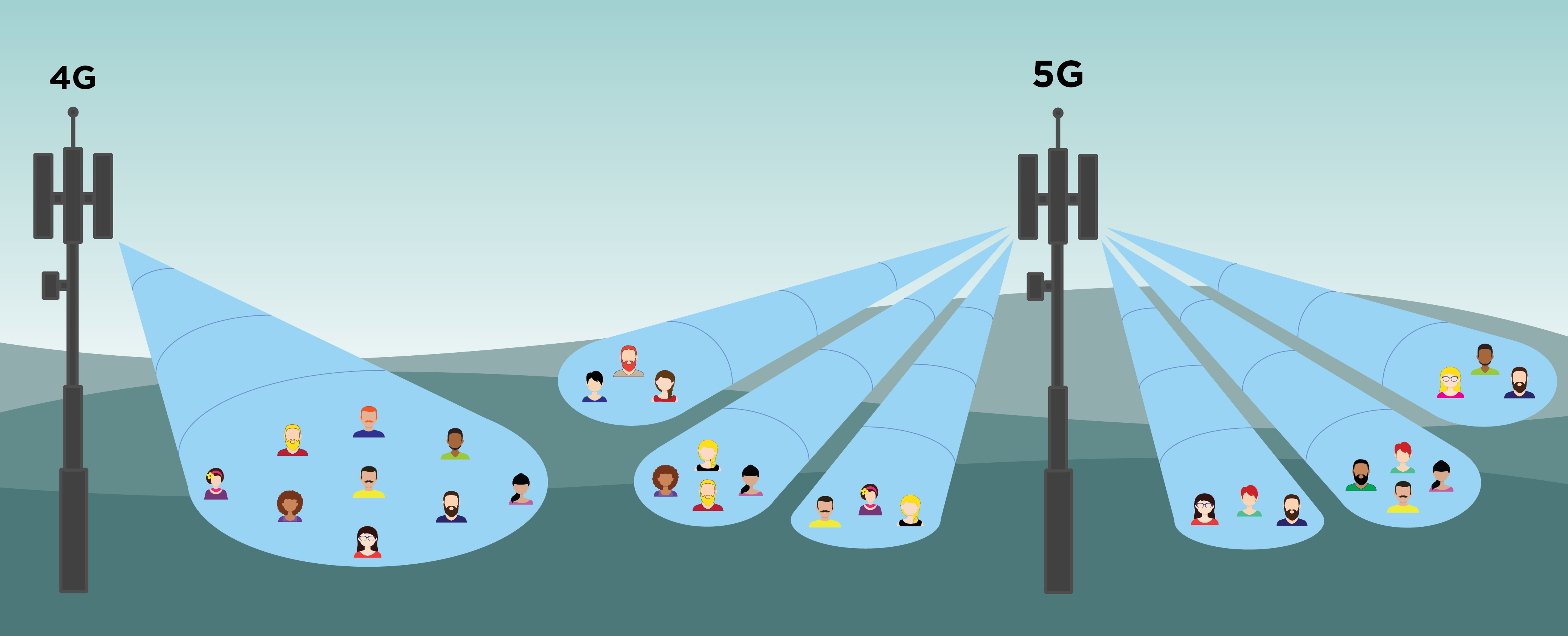
5G does provide a new system for transforming bytes over the air, offering the potential to transfer more data over the air at faster speeds, with reduced congestion and lower latency. This result is achieved by utilizing the 5G New Radio (NR) interface, Massive MIMO (multiple-input and multiple-output), along with expanded spectrum bands that use much higher radio frequencies (28 GHz versus 700 - 2500 MHz for 4G) and larger spectrum segments (100 MHz channel sizes).