
$95M
Canadian dollars in budget savings
-50°C
construction conditions
78
kilometers of 240-kV transmission lines
A significant portion of the project scope was to install new transmission lines in this rugged region, marked by swampy, frequently frozen muskeg terrain. Working in an area about 350 km (217 miles) northeast of Edmonton, the project encompassed 78 km (48.5 miles) of double-circuit 240-kV transmission lines and 1 km (0.6 miles) of double-circuit 138-kV transmission lines.
After evaluating new technologies in the early phases of the project, we put forward a proposal to design and supply a new tubular steel double‑circuit horizontal H-frame, instead of lattice towers. This was more efficient and cost-effective than the standard AltaLink lattice towers that had been proposed for transmission line structures. Also, the design was estimated to save $95 million Canadian dollars (about $72 million in U.S. dollars) in overall cost, partly by mitigating construction risks associated with the muskeg terrain.
Our team provided the new transmission structure design, and the associated savings, within an already compressed project schedule. Our comprehensive EPC efforts included proposal estimating and permitting, engineering, procurement, extreme weather construction and energization of the system.
The final phase of the project was in a remote area in northern Alberta, near Ipiatik Lake. For more than two years and in all seasons, we coordinated around reduced-daylight working hours, frozen ground and an extreme winter construction environment of -50°C (-58°F) weather.
In addition to the installation of transmission lines, a new 240/138-kV substation was constructed at Ipiatik Lake. Seven existing substations in the highly remote Alberta oil sands area also were modified.
The project presented a variety of challenges that needed to be addressed to remain on schedule and on budget. Strong project controls, attentive permitting work and careful consideration in scheduling despite climate and terrain conditions helped in that process.
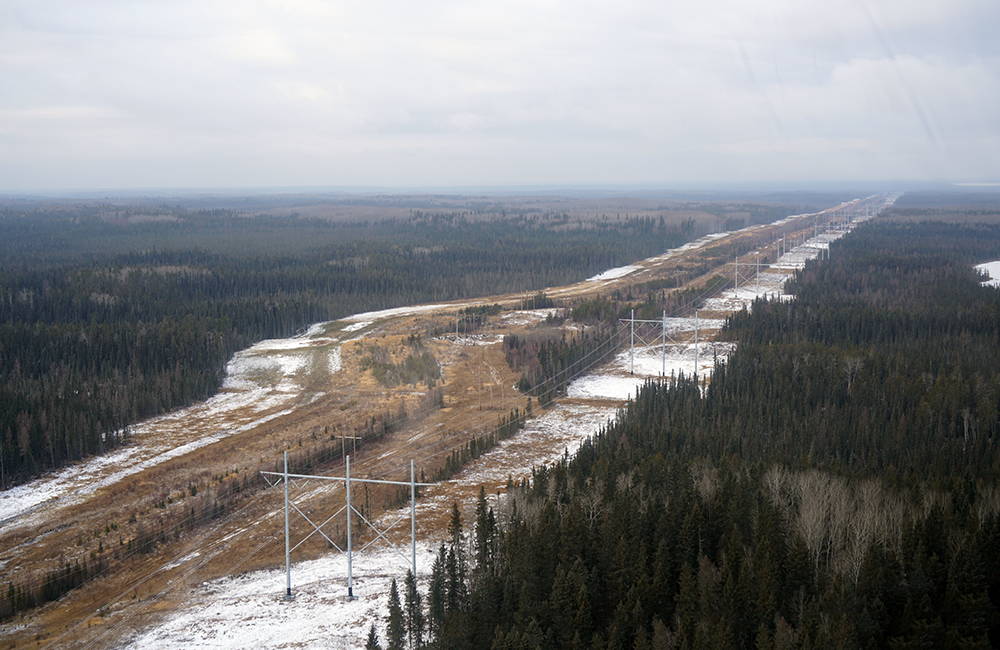
We designed unique transmission structures that reduced the construction schedule, eliminating the need for one winter construction season, and ultimately delivered the project on schedule and under budget. Compared to typical lattice towers, our structures created smaller footprints and did not require large temporary work areas, which minimized vegetation clearing. Our work was designed to minimize disruption to caribous during the sensitive calving season; it also preserved the caribou habitat by minimizing right‑of‑way clearing.
The Ipiatik Lake project was the first AltaLink project of its type and magnitude to be completed and energized on schedule in 12 years. From project timelines to remote locations, success was realized through strategic project decisions and client collaboration.
AltaLink honored the Burns & McDonnell team’s success on the project with its 2013 President’s Award of Excellence.


