Trending Topic | October 19, 2022

Refining Your Renewable Fuels Approach for Success

Producing renewable fuels is a potentially rewarding opportunity for refiners to enhance their services for profitable and lasting portfolios. From feedstock and technology selection to project delivery methods and complementary projects, several considerations can affect the feasibility of such projects.
Consumers are playing an active role in the energy transition. Leaders in the refining industry are uniting and setting aggressive goals to meet demand and move the industry forward as efforts to decarbonize the transportation sector continue to gain momentum.

Renewable fuels have potential to make a difference for heavy-duty transportation and aviation, helping reduce the sector’s carbon impacts. Sustainable aviation fuel (SAF) and renewable diesel (RD) are two biofuels that offer promise for decarbonization.

For producers looking to address emerging demand and pursue their own carbon reduction commitments, many considerations await. They must determine which feedstocks or technologies to select, which incentives or regulations might affect feasibility, and whether to convert existing plants or build new. An understanding of all the variables involved is critical to setting a course for successful projects.

Picking Your Pathway: Pros and Cons

ASTM International has approved seven pathways for SAF. These are brief overviews about the three most promising options:

Vegetable oils, animal fats and used cooking oil

Pretreatment: Neutralization, oil extraction, rendering

Feedstock: Triglycerides

Pathway: HEFA or catalytic hydrothermolysis

Output: SAF and RD

Feedstock Availability:
Supplies of soybean oil, a relatively abundant feedstock of this type with strong potential for growth via soybean crushing facilities, still can only meet a fraction of the volume needed for the SAF and RD markets, and only a fraction of the supply is available for renewable fuels. With limited availability and strong demand, market prices have doubled in recent years. Supplies of animal fats and cooking oil are limited. 

Technology Readiness:
HEFA (hydroprocessed esters and fatty acids) is a well-established process that produces fuels by reacting vegetable oil or animal fat with hydrogen in the presence of a catalyst. In contrast, catalytic hydrothermolysis jet fuel, a type of synthetic kerosene, remains in early commercial development.

Corn and Sugar

Process: Fermentation

Intermediate: Starch; alcohol (ethanol, isobutanol)

Pathway: Alcohol-to-jet

Output: SAF and other biofuels

Feedstock Availability:
The corn harvest is about 3.5 times greater than the soybean harvest. Corn provides about 33% yield to produce ethanol, of which about half currently goes toward production of SAF. Both corn and sugar can be used to produce ethanol; this process skips the ethanol to ferment the sugars and corn-derived starches to produce biofuels. Other processes are being researched that could produce biofuels directly from corn without converting to ethanol first. Ethanol might become increasingly available as transportation electrification shifts the balance of passenger cars toward electric vehicles and away from internal combustion engines. 

Technology Readiness:
The technologies involved are well established, with each part having been commercially demonstrated, but these steps have not been demonstrated at large capacity in this sequence.

Biomass

Includes wood waste, agricultural residues and municipal solid waste.

Process: Gasification

Intermediate: Combine with carbon dioxide into syngas

Pathway: Fischer-Tropsch

Output: SAF

Feedstock Availability
On a regional level, the feedstock could be very cost-competitive. However, gathering sufficient quantities to produce a significant amount of fuel will be challenging and could require investment in a centralized system for feedstock gathering and processing. For municipal solid waste, there are complexities in the logistics of gathering the materials, resulting in smaller plants. In general, even large quantities of this feedstock makes relatively little fuel.

Technology Readiness:
Gasification is well established, but gasification of biomass for purposes of converting it to liquid fuels is a growth opportunity, with some facilities planned to come online this year. Gasification creates syngas, and the well-established Fischer-Tropsch process, a catalytic chemical reaction, converts syngas to liquid fuels (jet or diesel). However, Fischer-Tropsch yields are relatively poor compared to other renewable fuel technologies.

Comparing Feedstock Ratios

The ratio of a feedstock to finished product is an important factor to weigh:

  • Ethanol-to-jet has a 60% to 65% liquid volume yield
  • Triglyceride feedstocks have:
    • 90% to 95% liquid volume yield when SAF is a co-product of RD production
    • 75% to 80% liquid volume yield if RD is cracked to extinction to make SAF

Ethanol feedstock is approximately 30% to 40% of the cost of triglyceride feedstock, so the lower yields of the ethanol process are offset by lower feedstock costs. Ethanol, in turn, is more expensive than Fischer-Tropsch feedstocks such as municipal solid waste and wood waste.

Reducing Carbon Intensity

Current legislation incentivizes transportation fuels with lower carbon intensity (CI). Producers can consider a variety of ways in which they can reduce the CI of their product along the chain of production, distribution and usage of fuels. This also helps plant operators reap the financial incentives that can help drive project success.

Completing conversion of facilities to produce renewable fuels could be considered the first phase of a longer-term project; the next phase is to reduce the CI. Some of those possibilities:

In the field

Everything from fertilizer choice to land use changes can impact CI scores. By testing soils and minimizing manufactured nitrogen use, applying precision agriculture technologies, and leveraging field management techniques, scores can be reduced.

Transportation and logistics

How far feedstock must be transported to the plant, and by which transportation method, can make a significant difference in CI, as can how far the renewable fuel products must be shipped to their final destinations.

Processing

Producers can make a significant impact on CI through the choice of steam, electricity or other plant energy sources, as well as the chemicals used in processing. In some markets, facilities can lower their CI by using carbon capture and sequestration instead of releasing carbon dioxide into the atmosphere.

Feedstock selection

Renewable fuel economics can be optimized by using feedstocks not intended for human consumption when possible. Food feedstocks hurt CI scores due to the deferred land use and fertilizer charges associated with their production. However, vegetable oil feedstock pathways such as soybean oil and canola oil tend to have a higher carbon footprint than animal fats, waste oils and cover crops.

Fuel choice

CI scores can be improved by minimizing high-carbon inputs such as natural gas and choosing lower-carbon inputs (e.g., renewable natural gas) where they can be monetized through incentives. High-carbon inputs can be further reduced by finding alternatives to hydrogen (such as blue or green hydrogen), since both the purchase price and carbon value must be accounted for in biofuel plants.

Success Strategies

Design is critical to setting up projects for success. For renewable fuels, this incorporates everything from feedstock selection and technology to location and partnerships. Successful financial outcomes derive from a combination of these choices to balance upfront costs against the multitude of incentives to determine the net value of any given combination.

The most significant incentives in play in the U.S. market include the long-standing federal Renewable Fuel Standard (RFS) program, state-level Low Carbon Fuel Standard (LCFS) credits and the IRA 45Z Clean Fuel Production Tax Credit.

Three keys to preparing projects for success:

Speed to market

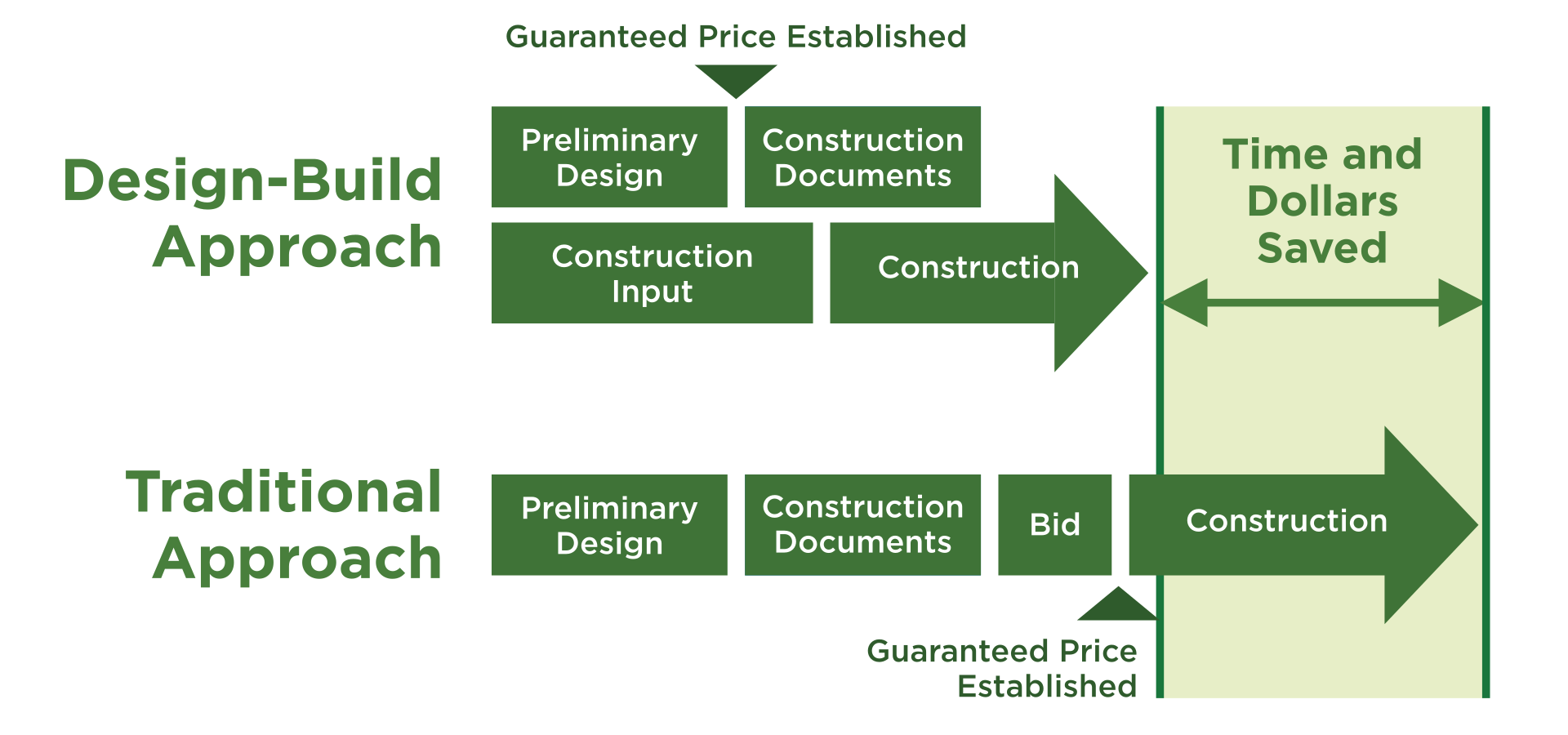
The choice of project delivery contracting approach can make a significant difference in how quickly and cost-effectively projects get completed. Using a design-build or engineer-procure-construct (EPC) approach enables earlier decisions, stronger collaboration, efficient management through a single source of responsibility, and overlapping phases to lock in prices early and deliver substantial time savings.
BM22-3-Digital-TT-44564-TimelineGraphic

Cost assurance

Earlier pricing clarity and scope development help plant owners and contractors achieve a high enough level of cost confidence to secure funding. Contracting strategies and carefully assembled front-end planning (FEP) can improve the accuracy of estimates, with trickle-down effects through procurement and implementation.

Partner selection

Experienced, integrated partners provide owners with the depth and breadth of resources to make speed to market and cost assurance into real project outcome differentiators. Contractors with diversity in talent and disciplines, backed by a culture that prioritizes safety and emphasizes client support, are well positioned to offer innovative solutions to achieve sustainability objectives cost-effectively.

Thought Leaders

Leah Freshwater

Project Manager

Burns & McDonnell

Meaghan McCaffrey

Managing Director, Renewables & Emerging Markets

Burns & McDonnell

Contact Us  

Subscribe